Training Track 6/5/2026
Ramona and I got together with our friends at Chesapeake Thermal Drone Recovery to lay some training tracks. These were simple and fun exercises for Ramona, as she was very busy the few weeks prior. We like to give Ramona easy wins to help keep up her motivation! It also feels good to just have fun and switch things up! We never know when we are going to be searching for a long time or a short time. We want her to stay focused and adjust to various conditions to remain accurate.
The fun thing about these short tracks is the influence of the wind. A trailing dog uses both ground odor and air scenting to determine where the subject is. This is helpful because we are usually called out multiple days after the pet has gone missing all the way up to 14 days! That is a lot of ground to cover. If we were working strictly a tracking dog following ground odor, we would never catch up! We train Ramona to potentially take “shortcuts” to get to the subject quickly and efficiently.
Since we know this about her training, we know to keep a wider radius when it comes to informing the client as to where their pet has and has not been. We cannot guarantee where we are training their pet walked. We can say they have been in this area. Melanie knows when Ramona switches from air scenting to ground odor. Her head carriage changes, she is not pulling as much on the lead, and she pauses to scan her environment searching for the odor. When Ramona is trailing ground odor, we can more confidently say the pet has walked specifically here.
Training Track 1
This first track was very telling as to how wind affects her perception of odor. The red is Ramona and the blue is Jim with Chesapeake Thermal Drone Recovery. Below is a picture from our GPS app that we run always with our clients. It shows wind direction, and it moves as the maps moves around so we always know our wind direction. Melanie generally does not follow the app for wind direction information. She relies on feeling the wind and odorless and harmless powder to confirm it in real time. It is apart of the intuitive process of working a trailing dog.
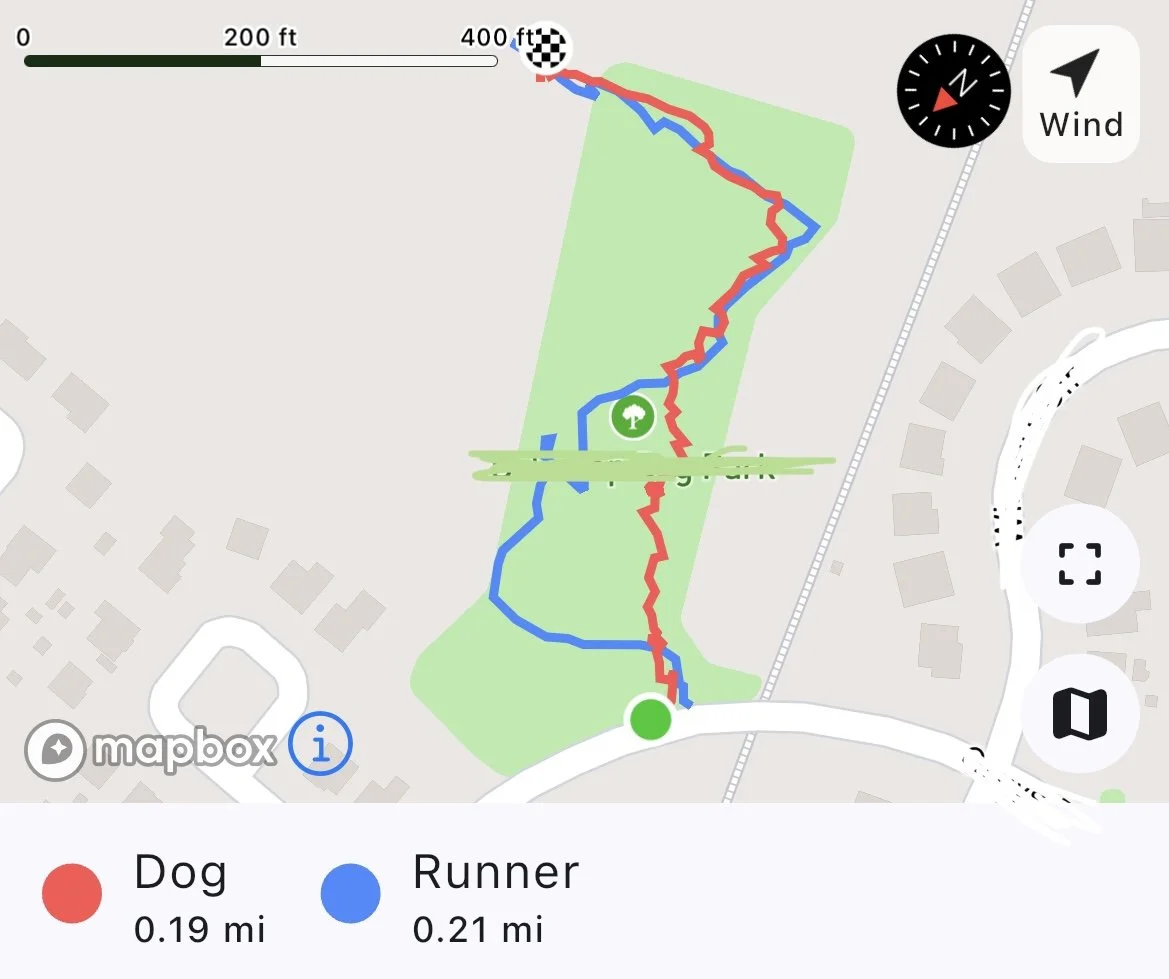
Ramona and I did not exactly know where the start was because we rarely do when trailing for missing pets. It just so happens we were pretty on it. This is a double-blind training trail. They were already hidden before we arrived, so neither Ramona or I knew where they were. Because we were working with ripping winds on an open field, Ramona was pretty much Immodestly air scenting. That odor was being pushed through the wind to the right, which is where we were following that odor. Then, we find the ground scent, and she switches to trailing that. You can see the change in her accuracy of where Jim actually walked. After the left turn, you can see we were slightly downwind again in a short section because that is how wind was moving the odor.
This is a great example to showcase how we would talk to clients about this track if we were searching for a missing pet. First, Melanie would describe that their pet traveled through this open field. The pet traveled through the open field and not the brush around this field separating the houses because then we would be pushed up against the brush or in it. Wind and odor travel differently and are affected differently from a wooded area to an open field.
Next, if Ramona ran out of odor where this training track finished, which was down a hill, then we would circle back and start a methodical search of this area. Depending on which animal we were finding would affect our search pattern. At the start of this session, Jim went over and walked around a bush to the left there. We would be sure we checked that bush. We would be sure we checked the brush line. Depending on the circumstances, we would check into the brush and even the perimeter of it in the house areas to see if the pet then came out. The pet could have turned around and was hiding or chose another path out of the area. I would want to find that.
But, because we knew it was a training exercise, and we found our human subject, I knew there was no need to go about searching more methodically. If we did not initially find him, we would.
Training Track 2
Now the second one also really showcases wind direction. It also shows my error misjudgment as a handler. This second one I was briefly and casually explained around where I wanted them to stop. Something short and easy. They definitely did a short and easy track, but because I assumed this was a single blind (I know but the dog doesn’t) track, and when she went past the area, I assumed they would be, I wanted to try to correct her. More on that briefly.
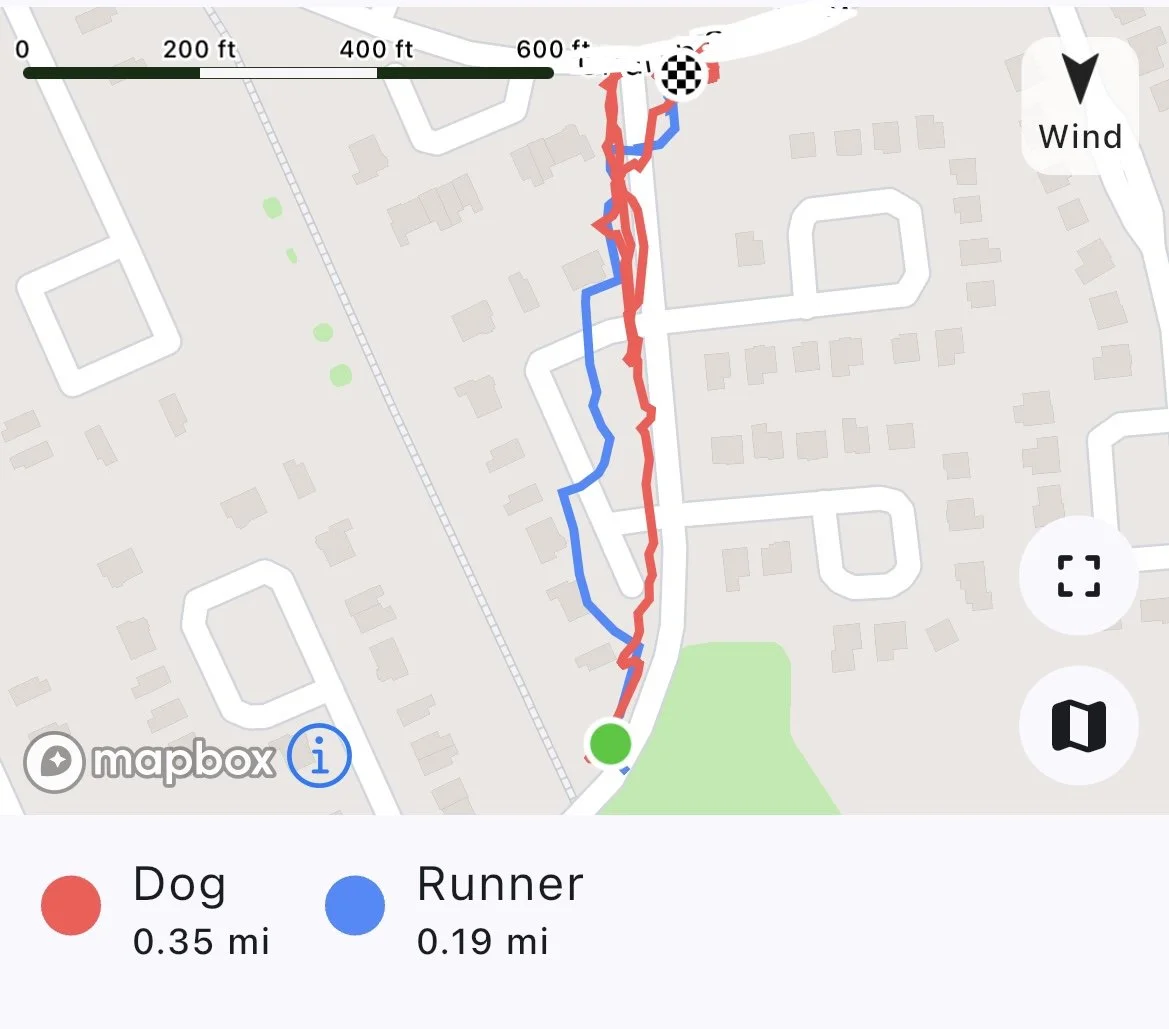
So, we started trailing on the sidewalk, and hard surfaces, especially on hot days like it was this day, is very hard for dogs. It is harder for Ramona because she is lower to the ground. With heat, odor rises. A larger breed dog is better at trailing in these conditions since their head is higher up. We are working with 3inch front legs. Since we know that as a team, it is easy for us to adjust search times to when Ramona will be the most successful when working with clients. This was a training track, so I wanted to work her under these conditions knowing around where it goes (or so I thought) so I can help her continue with this skill and see her body language in case we ever do work under these conditions.
She starts off perfectly, then catches the whiff of odor from the wind. When the trail goes left and we were still on the sidewalk, Ramona consistently was popping her head up to the left-hand side. I pointed this out to Ashley with Chesapeake Thermal Drone Recovery as well. I did not have the GPS where Jim had exactly walked, but due to her head popping, I knew there was odor over there. When working with clients, I would also note this to the client and continue to follow Ramona. Since she may have been taking a short cut, like in this training scenario, I would let her continue working to see what comes of it. But, if we have no odor, or we are needing to switch to a more methodical search, then we would not rule out this area. We would go back and walk along the other houses in this circle to get all the information from the area knowing how Ramona works.
Where I get into the mess of this is I thought Jim was going to be in the circle with the townhomes. Because I was assuming this, I wanted to try to correct Ramona when she went past the street and bring her back to work the area more carefully. I knew she was still trailing, and she stopped at the road and said not straight or left. I did not ask her to check right (where they were) because I assumed he was not there due to our conversation. During a client tack, we are checking ALL directions.
This is MY biggest problem as a handler. I need to run double-blind tracks, or have a flanker (someone walk with me) that knows the track. I am precise, a slight control freak, and a methodical person, and I do not want to accidentally teach Ramona inaccurate trailing skills that will affect her work finding missing pets. I assumed I knew where they were and stopped trusting my dog. Rule number one of trailing is always trusting you dog. I am forced to trust Ramona when trailing double blind trails because only she knows where it goes. I do trust my dog, but I also thought I knew better.
I turned Ramoan around, and she turned me back around. I had no choice but to follow her! I swear if she could roll her eyes she definitely did in that moment. She has a lot of personality to her, and when I try to guide her in an incorrect way, she will make it known that it is wrong. Sure enough, I was wrong! ALWAYS TRUST YOUR DOG!
There is no hard feeling with the track going a different way. It is actually really helpful for me specifically as a handler to get moments like these often because it keeps ME in check with my skills. It is also very rare that people follow the trail you ask them to lay, even when given specific written instructions and a map to follow. Human error is always a thing, and for some directionally challenged people it is even more so! It was more of a learning training session for me to remind myself as my skills as a handler. I knew she was in odor up to the street. It is why I followed her that far without turning her around. But I should have treated this training track like a client track and had her check right. I would have then giggled about it and it would have been an immediate success!
Take Aways
This was more so for me than anything. I need to learn where my strengths are as a handler. That is focusing on the dog, her body language, and the trust in this process. It was a perfect reminder as to why I always run double-blind with the GPS going on the subject and myself. I can compare the data later and log it into our training log. I can focus not where I think it goes but where Ramona actually says it goes, just like we do with clients! It significantly changed how I set up our next training sessions; I described the length I wanted the trail to be, what skills we wanted to work on, and sent them off that way! We were far success as a team when Melanie does not know where it goes!
We had a blast meeting up together just to have fun! Below are some other pictures the team got of us working!
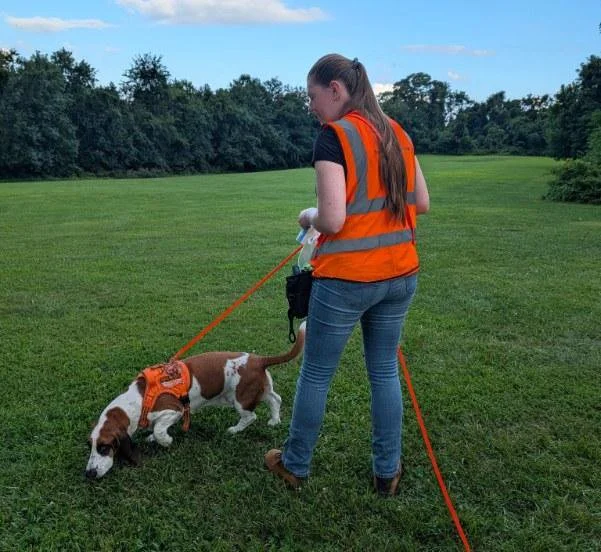
Initial track after scenting up. We are getting the scent article sealed back up!
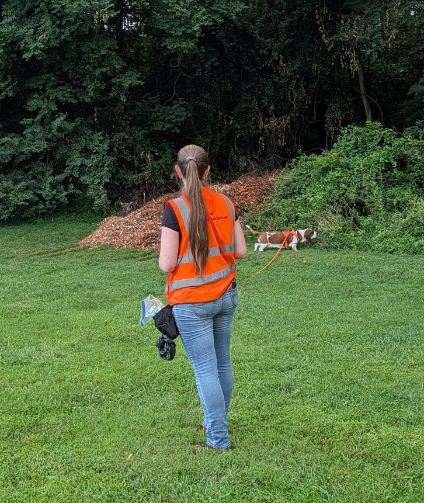
First track wind pushing the odor! Odor is getting caught in the tall grass and brush.
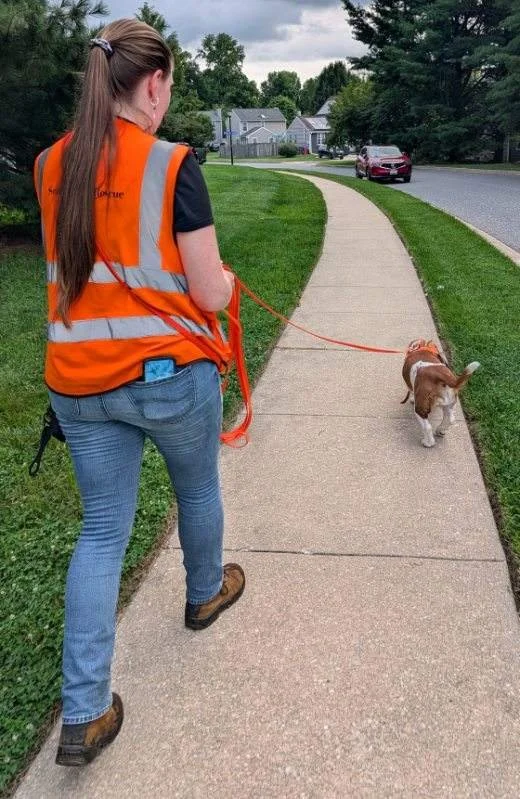
Second track at the start as well